We provide lender-ready capital raise packaging and debt or equity placement support for business owners and buyers looking to secure serious term sheets and close funding on a defined timeline.
Get Started With Financely
For business owners and acquirers pursuing private debtsubmit your deal for review. We revert within one working day with next steps and either a quote for our services.
What Markets Can You Trade Through an Online Broker?
Find The Right Lender Faster. Access 12,000+ Lenders.
AI Lender Match helps business owners, investors, and sponsors identify lenders that fit their deal profile without wasting weeks on cold outreach. Get a smarter starting point for acquisitions, commercial real estate, trade finance, and structured debt transactions.
What Markets Can You Trade Through an Online Broker?
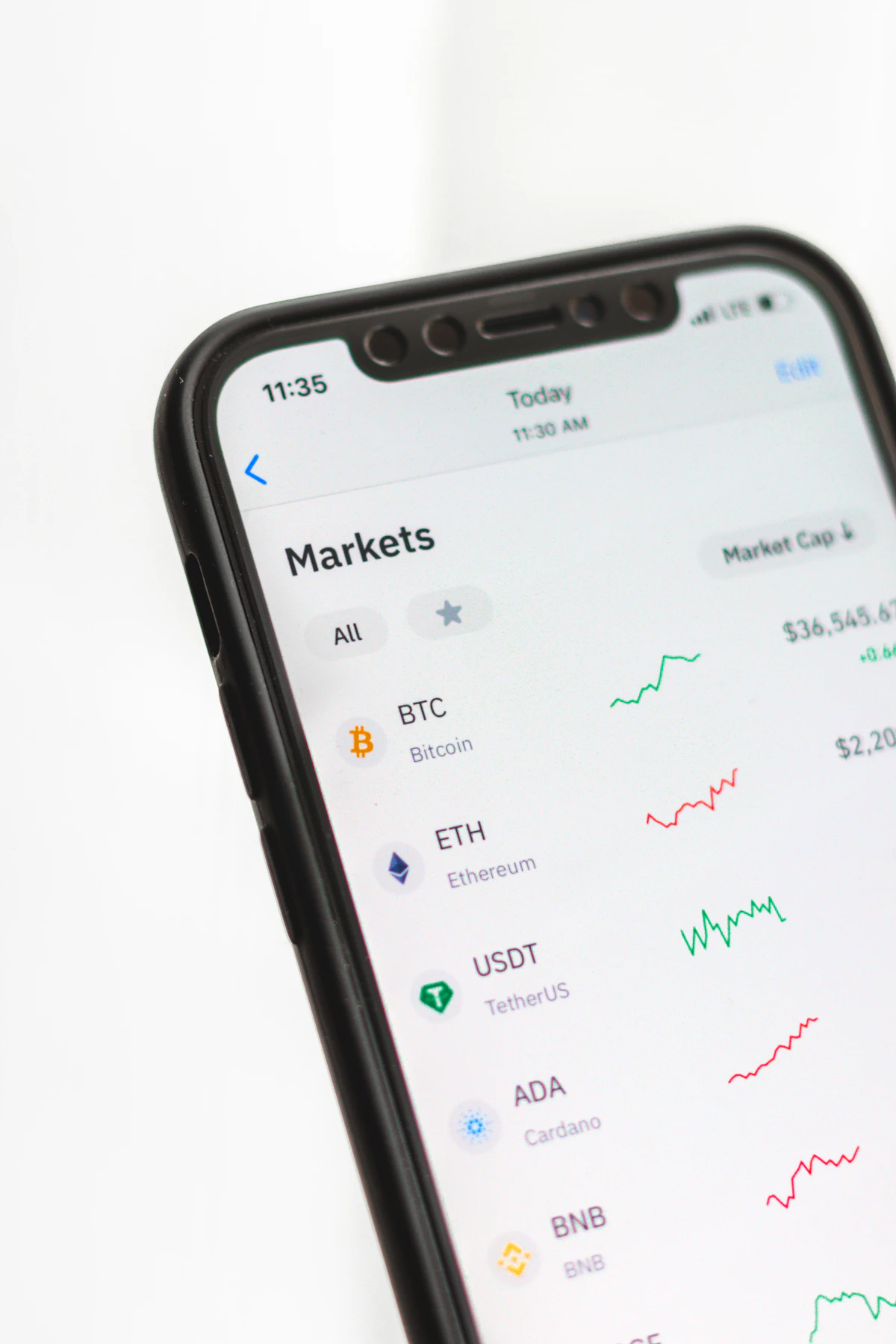
A brokerage account can give you access to several areas of the financial markets. From a single dashboard, you may be able to buy shares in a listed company, take a view on the euro against the dollar, or hold a fraction of a bitcoin. However, these markets operate under different rules, involve different asset types, and offer different levels of investor protection. For business owners and investors deciding where to place capital, those differences deserve as much attention as the range of instruments on offer.
Forex Market
Foreign exchange (forex) is the largest financial market in the world. It is supported by fresh data year after year. The Bank for International Settlements' Triennial Central Bank Survey
found that over-the-counter currency trading averaged $9.6 trillion per day in April 2025, up 28% from three years earlier.
That depth is one reason currency pairs have become a cornerstone of online trading. Major pairs such as EUR/USD and USD/JPY trade almost continuously from around 5 p.m. Sunday to 5 p.m. Friday, New York time. This is very suitable for people who can only follow markets outside office hours. However, currency moves can be abrupt. Interest rate decisions, inflation data, economic reports and political announcements all influence how investors value a currency. For example, in November 2026, the US dollar strengthened against the euro and Japanese yen after US inflation came in higher than expected. The data reinforced expectations that the Federal Reserve could raise interest rates in December, prompting investors to reassess the dollar against other major currencies.
In the United States, retail forex is offered off-exchange mainly by firms registered with the Commodity Futures Trading Commission as retail foreign exchange dealers or futures commission merchants, which must be members of the National Futures Association. Federal rules set minimum deposits that effectively cap leverage at 50:1 on major currency pairs and 20:1 on others.
Equities and ETFs
Stocks and exchange-traded funds (ETFs) are well-known options to gain exposure to publicly traded companies or groups of assets. When you buy shares through a traditional brokerage account, you generally own the securities, which a broker-dealer holds in custody on your behalf.
That structure brings a specific layer of protection. The Securities Investor Protection Corporation
covers up to $500,000 per customer, including $250,000 for cash, if a member firm fails and customer assets are missing.
However, SIPC protection has important limits. It does not compensate you for losses caused by falling market prices, and it does not cover commodity futures or forex accounts. If you hold shares and trade currencies through the same provider, the two activities may therefore fall under very different protection arrangements.
Futures
Futures allow traders to take positions on stock indexes, interest rates, energy, metals and agricultural products on exchanges. These contracts trade on regulated exchanges, where a clearinghouse stands between buyers and sellers to help manage counterparty risk. For years, contract sizes put many of them out of reach for smaller accounts.
That changed in May 2019, when CME Group launched Micro E-mini equity index futures at one-tenth the size of its standard E-mini contracts on the S&P 500, Nasdaq-100, Russell 2000 and Dow Jones Industrial Average. The exchange later described it as the most successful product launch in its history.
Smaller contracts give you more flexibility when sizing a position, but they do not change how futures work. Positions are marked to market daily, which means gains and losses affect your account as prices move. You may also face margin calls, and contracts expire on set dates. If you want to maintain a position beyond its expiry, you need to consider rolling it into a later contract.
Spot Crypto and Exchange-Traded Bitcoin Products
You can gain exposure to digital assets through two different types of products. The first is spot ownership on a regulated exchange or trust company, sometimes accessed through a broker's partnership rather than the broker itself. In that arrangement the partner usually holds the coins, and the account is typically unleveraged. Trading runs around the clock, weekends included.
The second route opened in January 2024, when the SEC approved the listing of spot bitcoin exchange-traded products following a long string of rejections. These products sit inside ordinary brokerage accounts and trade during stock market hours. The SEC chair at the time made it clear that approving the products was not an endorsement of bitcoin itself.
What US Rules Keep Off the Menu
Readers who follow markets abroad will notice that contracts for difference, common in the UK, Europe and Australia, are absent from US platforms. Retail CFD trading is effectively unavailable to US residents because of how federal securities and swaps rules treat these over-the-counter products. Americans who want leveraged exposure to indexes or commodities generally turn to exchange-traded futures or listed options instead, and any provider marketing CFDs to US residents deserves caution.
Checking a firm's standing takes minutes. The NFA's BASIC database
shows whether a firm is registered with the CFTC, its membership status and any regulatory actions, while FINRA's BrokerCheck and the SEC's adviser database offer similar checks for securities firms.
Choosing the Right Markets for Your Investment Goals
The range of markets available through online brokers has expanded, but access to more instruments does not automatically make an account more suitable. Your choice should depend on what you want to trade and how you plan to use the account.
A business with euro-denominated revenue may be more interested in currency pairs. An investor building long-term wealth may never need anything beyond equities and funds. Someone seeking exposure to oil prices or interest rates will likely find futures the most direct instrument.
Before opening an account, three practical questions help. Which regulator oversees each product? Is the asset owned outright or held as a leveraged contract? And what protection applies if the firm itself runs into difficulty? The answers will often differ from one market to the next, even within the same platform.
This article is general information only and is not legal, tax or investment advice. Trading and investment outcomes depend on market conditions, regulatory frameworks and account terms, and no financial outcome is guaranteed.
Before you submit
Your deal, assessed by people who close
Your financing request goes straight to the principal. You receive a written diagnosis, the proposed structure and a one-off retainer before any work starts.
Recent mandates include a USD 150m revolving credit facility and a USD 12m acquisition closed in 21 days. We are an advisory and arranging firm, not a lender, and you close directly with the lender.
Financely is an advisory and arranging firm, not a lender or broker-dealer. All financing is subject to KYC, AML, due diligence and lender credit approval. No outcome or timeline is guaranteed.
Still Have Questions? Send Us Your Deal
If you still have questions after visiting ourFAQandProcedurepages, we invite you to book a paid consultation for personalized guidance. A $250 USD fee applies per session.
Important Resources
Popular Services
Security notice: we are aware of third parties using Financely’s name without authorization.Only emails sent from our official domains and communications through our portal are valid. Please verify any outreach before sharing documents or sending payments, and read ourimpersonation warning.
About Financely
Financelyadvises growth-focused businesses on accessing capital by introducing their opportunities to professional investors. Financely is not a securities broker or dealer. Where appropriate, engagements are coordinated with regulated broker-dealers, investment banks, legal counsel, and other specialists.
All mandates start with an RFQ. We review submissions, issue a brief Go/No-Go memo, and where bankable, release a Term Sheet that leads to funding. We arrange capital across Senior Secured, Unitranche, Second Lien/Mezzanine, Preferred Equity, and Gap Solutions. We do not process deals by email or chat.
Trade Finance
Letters of Credit, Standby LCs, Confirmations, Receivables Finance, and Inventory Lines with control.
LCs and Confirmations
SBLC and Guarantees
AR/AP and Supply Chain
Funding arranged for trade flows with instruments sized to your cycle and aligned to delivery and settlement.
Move forward to secure working capital and keep goods moving. Submit the RFQ to start underwriting for funding.
KYC and Source of Funds required. Engagements are best-efforts and subject to underwriting. Preference for operating companies with meaningful revenue.
See our FAQ
and Procedure.
Financely Inc. (“Financely”) provides corporate-finance advice and is wholly owned by Aurora Bay Trust, a trust formed under Bahamian law, together with its authorized affiliates. Depending on deal structure, jurisdiction, and local rules, engagements may be carried out through Financely Group LLC, a non-deposit-taking, non-banking financial company; Ashford Capital Advisory LLC; or another related entity.Financely and its affiliates are not registered as securities broker-dealers and do not execute securities transactions or hold client funds or securities. When a mandate involves the purchase or sale of securities and a registered intermediary is required, any orders are introduced to and executed by one or more independent U.S. broker-dealers registered with the SEC and FINRA. Those broker-dealers are solely responsible for trade execution, custody, and related regulatory obligations. Nothing in this material constitutes an offer, solicitation, or recommendation to buy or sell any security or to engage in any specific transaction. Before engaging Financely Group LLC, Ashford Capital Advisory LLC, or any affiliate, you are responsible for confirming that such engagement complies with your own legal, regulatory, tax, and other requirements. In the United States, certain advisory activities may be conducted in reliance on exemptions available under the Investment Advisers Act of 1940, including the “foreign private adviser” exemption where applicable. Our services and regulatory status may vary by jurisdiction and by transaction type.Clickhereto download our brochure. Emailsupportdesk@financely-group.comfor general enquiries.Click hereto view the complete regulatory disclaimer.